An official website of the United States government


 ) or https:// means you've safely connected to the .mil website. Share sensitive information only on official, secure websites.



Science Behind the Warfighter: Leaky Gut
Leaky gut: What is it, and what does it mean for warfighters?
Believe it or not, the human gastrointestinal system is a cornerstone of overall health. Home to the gut microbiome, a complex community of trillions of microbes, the gastrointestinal system is relied on for digesting food, absorbing nutrients, and maintaining a well-functioning immune system. When this complex system is healthy, the gastrointestinal tract acts like a well-oiled machine.
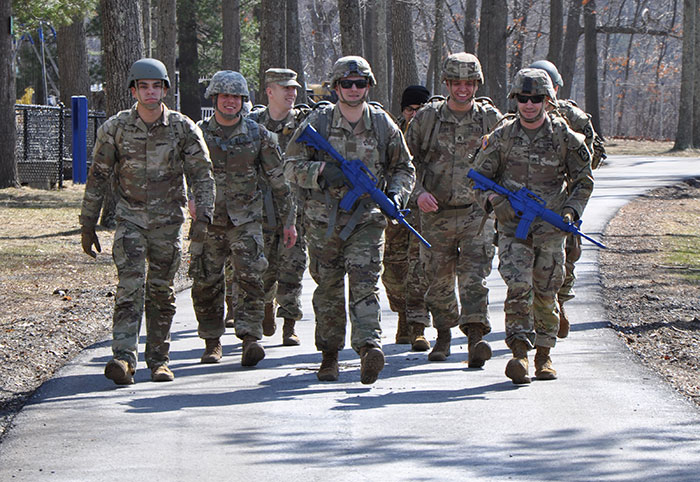
However, environmental stressors, such as those encountered by military personnel during training and deployment, can temporarily or more permanently damage the system, creating vulnerabilities that could ultimately compromise readiness and performance.
What is leaky gut?
"Leaky gut" is a term used to describe increased intestinal permeability. In a healthy gut, the cells lining the intestinal wall are tightly packed, forming a strong barrier. This barrier is selective, allowing water and nutrients to be absorbed while preventing toxins, pathogens, and undigested food particles from entering the bloodstream.
When this barrier becomes compromised or "leaky," permeability increases and these unwanted substances can pass through, triggering an inflammatory response from the immune system. This inflammation can lead to gastrointestinal symptoms and other issues and may affect a warfighter's overall health and performance.
Are warfighters at risk?
Military personnel often operate in austere environments and face unique physical and mental stressors. Stressors include environmental extremes such as high-altitude and heat. Others include intense or prolonged exercise, especially when conducted in the heat, gastrointestinal infections, and psychological stress. All these stressors can negatively impact gut health and contribute to increases in intestinal permeability.
Does Leaky Gut Affect Performance?
Effects of increased intestinal permeability may not be readily noticeable and could manifest as gastrointestinal discomfort or possibly include degraded mood and focus. If increased intestinal permeability persists over a long period of time, resulting inflammation could contribute to or worsen chronic health conditions. For a warfighter, these issues can directly impact readiness and performance. Promoting gut health is likely one of many important factors for maintaining a healthy and lethal force.
How is Leaky Gut Be Managed?
The good news is that gut health can be managed and improved. One way is by eating a diet rich in plants, vegetables, legumes, whole grains and fermented foods like yogurt. A diet containing these foods will contain fiber and a diverse assortment of other compounds that nourish healthy gut bacteria (known as prebiotics) and beneficial live bacteria along with the health-promoting compounds those bacteria produce. All those components help maintain a healthy gut and strong intestinal barrier. Those benefits can be enhanced by complementing gut health-promoting diets with regular physical activity.
How can USARIEM help?
The U.S. Army Research Institute of Environmental Medicine's Military Nutrition Division, includes nutrition scientists and research dietitians who conduct science that helps shape the policies that define warfighter nutritional requirements. Those requirements, in turn, dictate the nutritional content and types of foods offered to warfighters in dining facilities and operational environments.
USARIEM scientists also know that it can be difficult for warfighters to always maintain an ideal diet and that specialized nutritional strategies can help facilitate performance optimization. To solve this, one focus of the USARIEM team is developing performance-optimizing nutritional strategies that are easy to implement in the field and tailored to unique warfighter nutritional requirements.
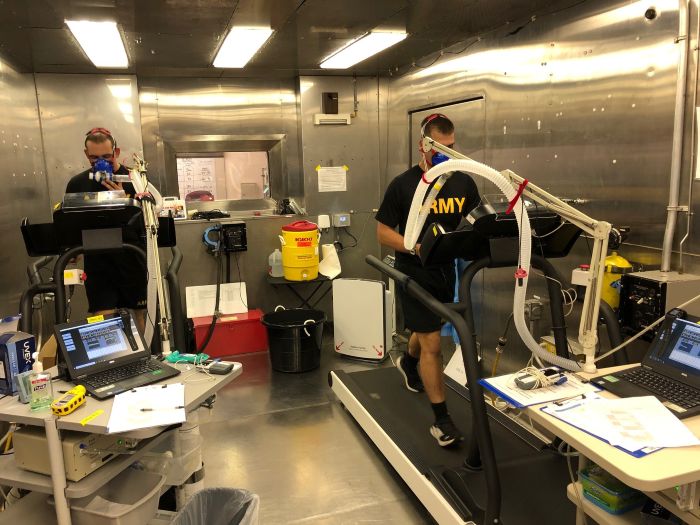
One recent example is a nutrition bar developed by MND scientists in collaboration with the US Army Combat Feeding Directorate design to feed healthy gut bacteria with a diverse blend of prebiotics fibers and extracts of cranberries, blueberries, cocoa, and green tea leaves. In initial testing, the nutrition bar nourished beneficial gut bacteria and prevented increased intestinal permeability in soldiers exposed to simulated high altitude using USARIEM's hypobaric chambers.
Current USARIEM studies are testing whether prebiotics and live beneficial bacteria known as probiotics can improve physical and cognitive performance by maintaining a resilient intestinal barrier in warfighters exposed to physically- and cognitively demanding stressors. Developing and validating these targeted, tailored nutritional solutions is one way in which USARIEM scientists work to ensure soldiers remain ready, resilient and effective, no matter the environment.
USARIEM is a subordinate command of the U.S. Army Medical Research and Development Command under the U.S. Army Transformation and Training Command. USARIEM is internationally recognized as the DoW's premier laboratory for Warfighter health and performance research and focuses on environmental medicine, physiology, physical and cognitive performance, and nutrition research. Located at the Natick Soldier Systems Center in Natick, Massachusetts, USARIEM's mission is to research and deliver solutions to enhance Warfighter health, performance and lethality in all environments.